The Content Engine — video and podcast production for market centers

A Video and Podcast Producer for Your Whole Market Center

An amenity that helps your agents build their brand — a room, the equipment in it and a booked session with somebody whose job is getting the content made — is not something a cloud brokerage can offer.

Free, no obligation — we’ll map what your office wants to produce.

The Problem

Why Agents Don’t Make Video Content

Making one video is three separate jobs. Someone has to decide what it is about and write it. Someone has to run the shoot so the agent is lit, framed and not reading from their phone. Someone has to cut it, caption it and get it out while it is still relevant.

An agent who is good at one of those is rarely good at all three, and the one they are worst at is the friction that stops them. A week spent making one mediocre video is a week not spent on listings, which is why the habit dies in month two even when the intention was real.

Let VRA take care of it all.

The Fix

How a Producer Removes the Friction

One person carrying all three jobs, on a schedule.

Writes the script

  • Built from the agent’s own market knowledge, not generic content
  • Neighborhood guides, market updates, what the market just did
  • The questions buyers and sellers actually keep asking

Directs the shoot remotely

  • The producer runs the session while the agent is on camera at your office
  • Framing, lighting and delivery handled live, not fixed afterwards
  • No one at the office has to learn to film

Edits, delivers and schedules

  • Finished pieces plus short cuts for social
  • Captions and formats for each platform
  • Turnaround the agent does not have to chase
Scope

What Gets Made

The market they actually work in — what has changed on a street, why one block holds value and the next does not, what a neighborhood is like to live in. The questions that come up in every first meeting, answered once and properly. Whatever the office has just put in front of them, whether that is a builder presenting an incentive, a lender explaining a program or a class the office ran. Real estate video and podcast topics sets out the full bank by category.

Podcasts and interviews run on the same room and the same producer, recorded at the office and delivered ready to use. How a podcast builds a real estate business goes through why agents do it, and how video builds a real estate business does the same for the camera.

A brand is not built by one piece of content. It is cumulative, and it comes from an agent turning up often enough that people in their market feel they already know them — which is why the second piece, not the first, is the one that decides whether this works. Agents rarely stop because the first one was bad; they stop because making the next one went back to being their job. The producer arrives with the next topics already settled, and some offices book a series rather than one session at a time. Turning office events into agent content covers where the subjects keep coming from.

For the Market Center

The Producer Makes the Office’s Content Too

Agent content is only half of it. The same producer and the same room make what the market center needs for itself — which in most offices is nobody’s job, and so does not get made.

Filling the room

  • Training, classes and office social events
  • A class does not fill because somebody announced it once — it takes weeks of steady promotion
  • That promotion is video somebody has to make

National events

  • BOLD, Family Reunion, Mega Camp and the rest of the calendar
  • Promotion before, so registrations come from more than an email
  • Agents filming what they brought back, which markets them and shows the office what the trip produced

Recruiting

  • Pieces cut for social rather than for a listing presentation
  • What the office is actually like, in the words of the people in it
  • Visible to agents who have never walked through the door

The office’s own voice

  • Leadership messages and announcements
  • Agent testimonials and recognition
  • Podcast episodes recorded in the same room

It runs the other way as well. An office that brings a builder or a lender in to present can put those agents straight in front of the camera afterwards, while they still have something specific to say. The same holds for what agents bring home from a national event: filming it turns one agent’s takeaway into something their clients can use, and it shows the agents who stayed behind what the room was worth — which is the most persuasive promotion the next one will get.

What It Takes

What Your Office Actually Needs

Less than most leaders assume. A plain white wall is enough to begin with. An office that wants a dedicated set with backdrops and lighting can build one, and some do, but that is a choice about how the room looks rather than a condition of getting started.

The production capability travels with the producer. The room is yours, built to whatever standard you want it, and it stays yours.

The Case

The Three Questions a Team Leader Is Answering

How do I make the agents I already have more productive?

Buyers and sellers look an agent up before they call, and an agent who shows up consistently is already familiar by the time the phone rings. Almost none of them manage it alone, because it is the third video that gets skipped rather than the first. Removing the writing, the filming and the editing turns a project back into a fifteen-minute ask, and that is the difference between agents who intend to be on camera and agents who are.

How do I attract agents who will be productive?

This is the part that compounds. It attracts the agents who recognize what it is for. An agent who lights up at a studio and a producer is telling you something about how they intend to work, and that is a better filter than any recruiting pitch. An agent at most offices leaves a builder presentation with a page of notes; an agent with a room and a producer leaves with a finished video. An office can go further and attach a series to the moment a recruited agent arrives, so the offer is visible before they have moved a single file.

How do I keep the agents I have?

A room, the equipment in it and a booked session with somebody whose job is getting the content made are things an agent cannot assemble alone, and they start with having a building. For an agent who wants to be in front of their market consistently, that is a tangible benefit rather than a number, and it is one a cloud brokerage has no way to offer.

All three are the team leader’s job, and none of them is a back office problem. That is why this comes out of the agent attraction, productivity and retention budget.

How It Works

A Role That Arrives Already Defined

The producer arrives trained and ready to do the work. VRA writes the role, recruits against it and trains to it, so the office is not designing a job, working out what good looks like, or interviewing for a role it has never hired for.

The office’s part is access: the systems it already uses, someone for the producer to work with, and the room.

Pricing is quoted per office rather than listed, because what a market center wants produced varies more than a back-office role does. You get the number on the call.

In Practice

What It Looks Like at Keller Williams Memorial

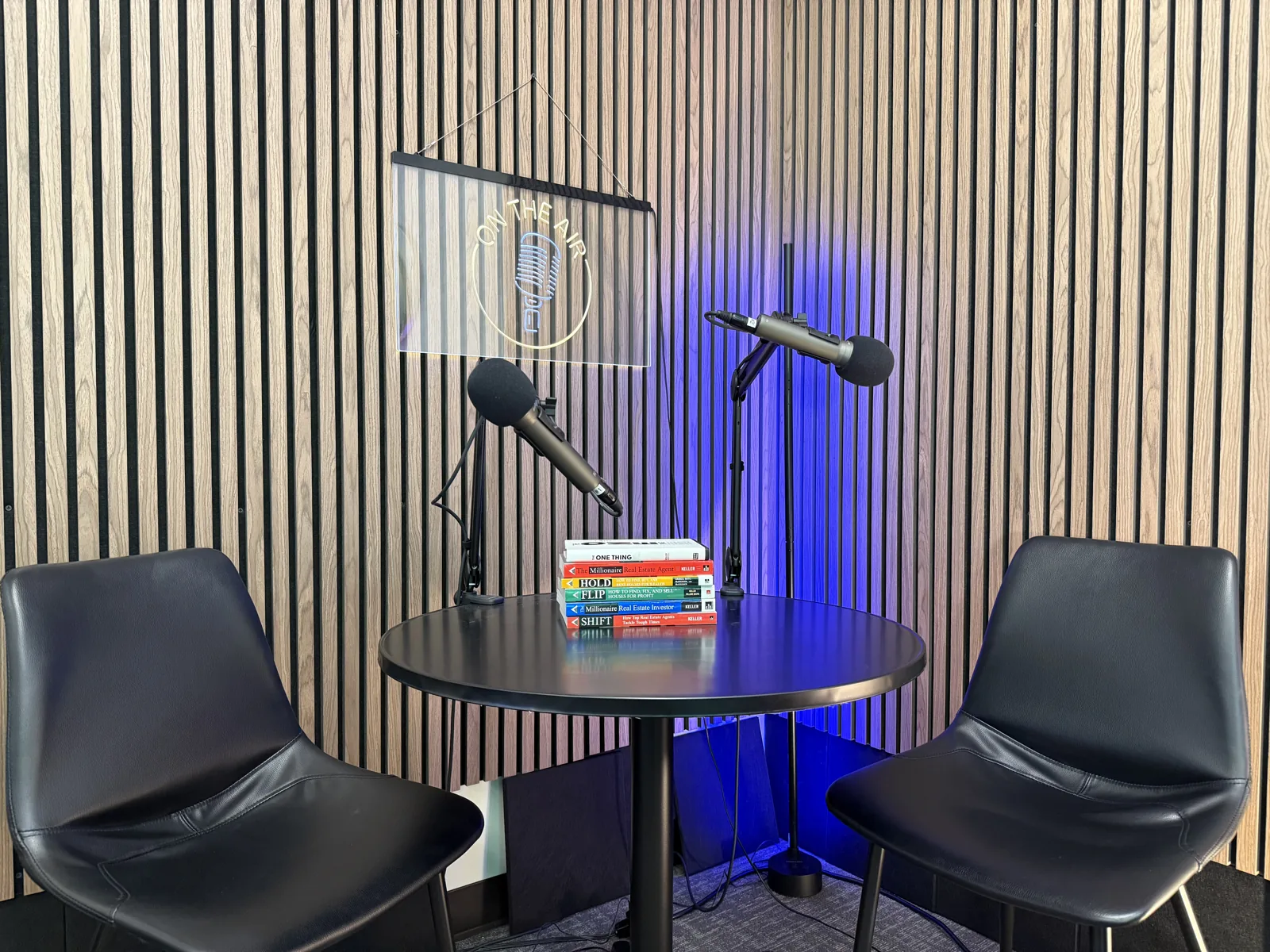
See the VRA Content Engine in action at Keller Williams Memorial in Houston, with their Memorial Ave Content Lab: explore video and podcast marketing for agents, and a look inside the lab itself. See the full market center offering.

The podcast set in the Memorial Ave Content Lab at Keller Williams Memorial: two microphones on boom arms, a round table and two chairs against a slatted wood wall
The podcast set in the Memorial Ave Content Lab at Keller Williams Memorial, Houston.
FAQ

Questions Market Center Leaders Ask

What the producer covers, what your office needs, and how it is priced.

What does the producer actually do?

Three jobs that are usually three different people. The producer writes the script from the agent's own market knowledge, directs the shoot remotely while the agent is on camera at your office, then edits the footage and delivers the finished piece along with short cuts for social. What they do not need from the agent is preparation, equipment or editing time, which is what decides whether that agent is still filming in month four.

Does this cover podcasts, or only video?

Both. The same room and the same producer handle podcast and interview recording, and the finished episode comes back ready to use.

Do we have to build a studio first?

No. A plain white wall is enough to start. An office that wants to invest in a dedicated set can, and some do, but it is a choice rather than a precondition. The production capability travels with the producer, not with the room.

Who comes up with what the videos are about?

The agent brings the market knowledge and the producer turns it into a script. Neighborhood guides, market updates, answers to the questions buyers and sellers keep asking. The agent sounds like themselves because the substance is theirs.

How is this different from a regular VRA assistant?

Every other assistant VRA places arrives ready to learn your job description. This one arrives with the job description already written. VRA defines the role, recruits against it and trains to it.

What does it cost?

Pricing is quoted per office rather than listed, because what a market center wants produced varies more than a back-office role does. Book a call and you will get the number, along with what it covers.

How often do videos go out?

As often as the office puts agents in front of the camera. Agents can book a session, and the office can tie sessions to things already happening — a builder presentation, a market shift, a milestone. An office can also tie a series to a moment that matters, such as a recruited agent arriving, which turns one booking into a run of them.

We are competing with a cloud brokerage. Does this help?

Yes. It is one of the few things that does, because it starts with a room. A room, the equipment in it and a booked session with a producer are not things an agent assembles alone, and they exist to put that agent in front of their market more consistently. It gives a retention conversation something tangible to point at rather than a list of intentions.

Is this only for the agents, or for the office too?

Both. The same producer makes the office’s own content alongside the agents’ — recruiting pieces, leadership messages, agent testimonials, podcast episodes, and the promotion that fills a room for an event or a class. It runs the other way too: an office that brings builders or lenders in to present can walk those agents straight into the room afterwards, so the event becomes content the same afternoon.
Every Industry

We Also Support

VRA trains virtual assistants across industries — explore what a VA looks like for your line of work.

Want to See What Your Office Could Produce?

Book a call and we’ll go through what your agents would film, what your room needs, and how sessions get booked.

Book a Free Strategy Session